
21 July is National Lamington Day: Enjoy the colourful story of this local confection
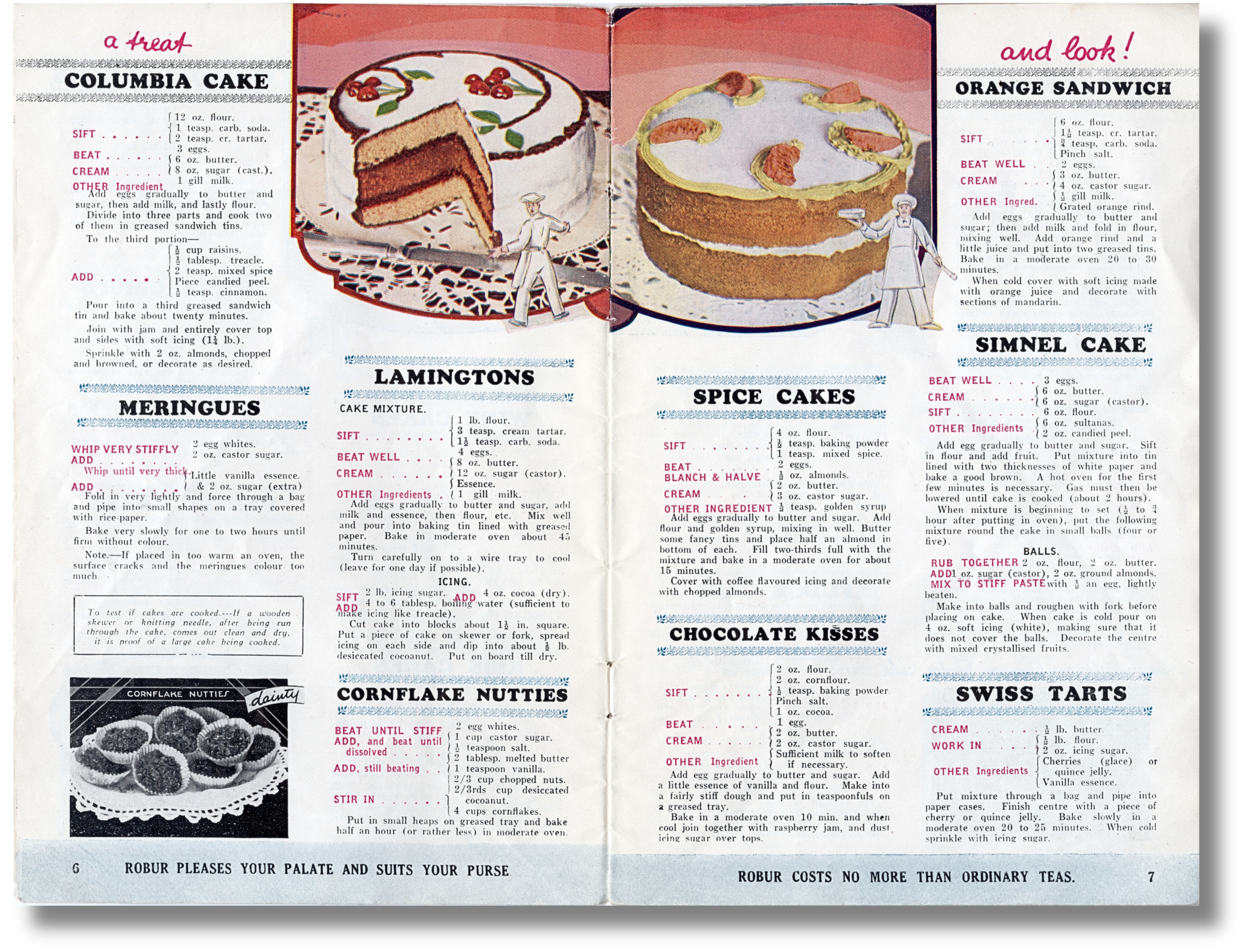
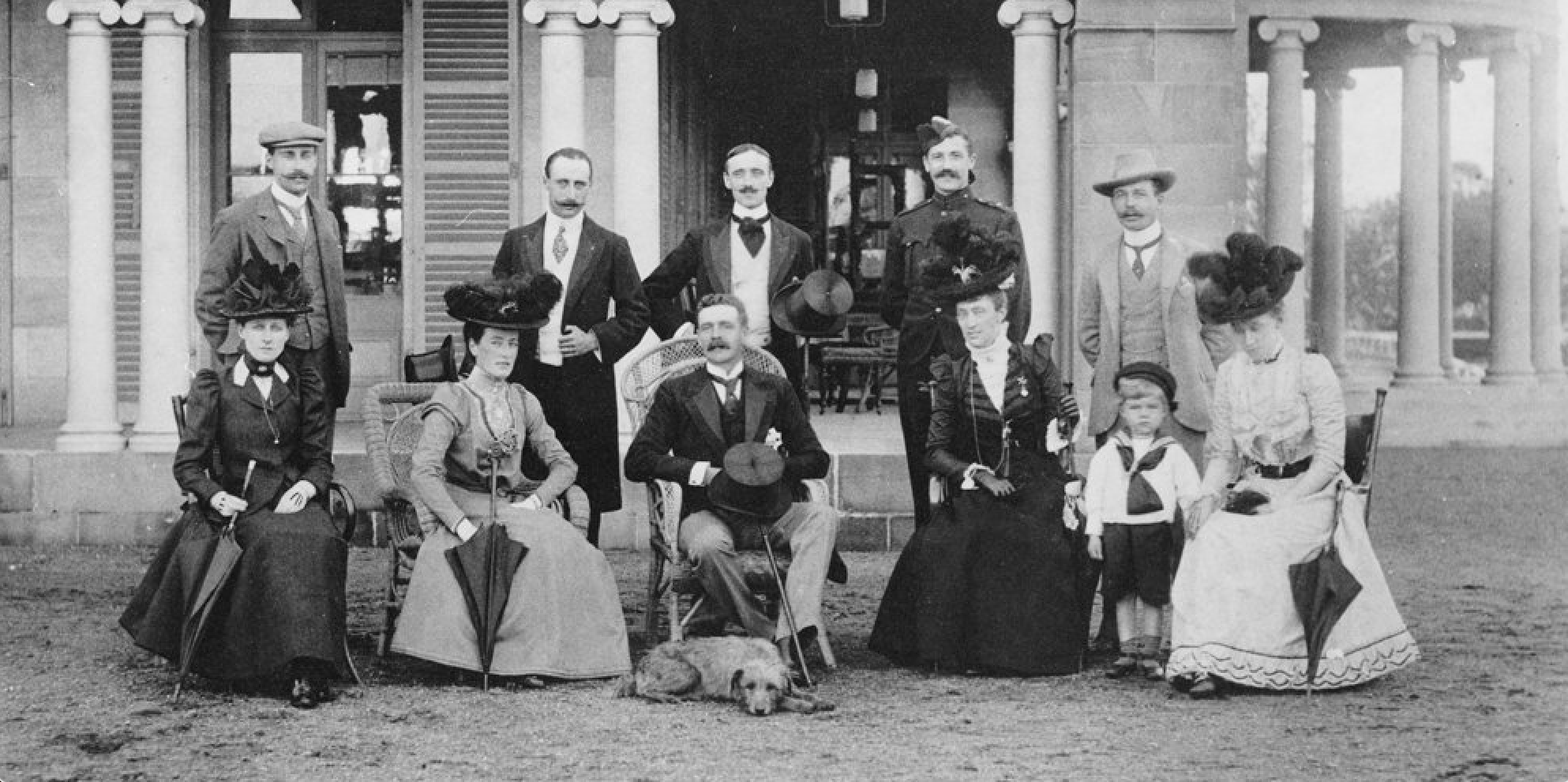
The Origin of the Lamington
Lamingtons are named after Lord Lamington (The 8th Governor of Queensland 1896 – 1901) Or, according to some sources, after Lady Lamington? There are many and varied stories about the origin of the Lamington, the who, why and where it was invented. And, many articles, books and sources claiming to have the definitive lamington story.
Popular theories purport that the lamington was invented, by necessity or accident, by variously, a clumsy maid dropping cake into chocolate, Lady Lamington herself or the Government House chef Armand Galland. It was the solution to quickly providing a dessert for an unexpectedly large group visiting Government House in Brisbane. But counter claims argue that it originated in Toowoomba, and was created for an event at the Governor’s summer residence Harlaxton.
Toowoomba or Brisbane?
Toowoomba holds the Guiness World Records for baking the largest lamington (11 June 2011) and has flagged that it plans to build a giant lamington but according to Dr Katie McConnel, QUT historian and Old Government House curator, Brisbane is the home of the lamington. https://www.ogh.qut.edu.au/history/house-bites/house-bites2/battle-of-the-lamington
there is no dispute about it – Brisbane is the original home of the Lamington. It was definitely first made at Old Government House by French chef Armand Galland,” “Monsieur Galland came to Australia with Lord and Lady Lamington in 1900 and cooked for them until they left in 1901. The lamington was born of necessity: It was Monsieur Galland’s answer to the great number of visitors that came to Lady Lamington’s ‘At Home’ event in June 1900, an event which an estimated 1200 people attended. To accommodate such a large number of guests, Galland would have relied on something he was very familiar with and made large quantities. It proved so popular that Lady Lamington was inundated with requests for the recipe and thus Galland named his delectable treat in honour of his patrons the Lamingtons.
Contested History?
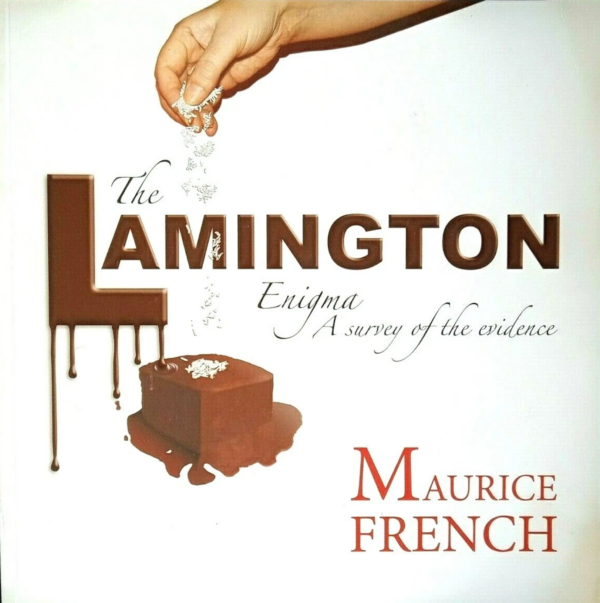
Professor Maurice French, Southern Queensland University has written a definitive book on the lamington, The Lamington Enigma: A Survey of the Evidence.
He concludes that the “fast concoction from the chef” story was a myth. Interviewed in 2022, (https://www.abc.net.au/news/2022-07-21/queesland-chef-toowoomba-invented-lamington-historian-denies/101256014) French states:
One of the roles of the historian is to explore myths, and probably in doing so, destroy them. “In 1890 there were large number of recipes based on sponge cakes with some sort of icing on them. These evolved freely from word of mouth and got into various recipe books and cooking columns in papers. “So the question is not so much when the lamington was invented, as when the Lamington was named.”
Professor French believes the name was most likely coined by students at the Brisbane Technical College.
“Not for Lord Lamington, but for his wife, Lady Lamington, who was the patron of the cooking class,”
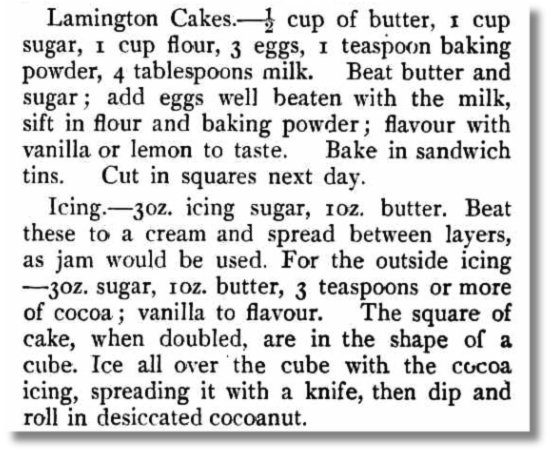
The first recipe for lamingtons was published in 1900
Irrespective of its somewhat hazy origins, the lamingtons popularity and reputation spread quickly. The first recipe was published in Queensland in 1900 with reprints and requests for the recipe appearing in Queensland and NSW newspapers the following year. It appeared in a cooking competition in Tasmania in 1906, when Mrs R Steel was awarded first place for lamingtons at the Annual Flower and Produce Show in Bracknell.
Butter Cake or Sponge Cake?
This is a perplexing question for researchers and home cooks as varying accounts and recipes cite both types of cake as the basis for the lamington. The historic Galland accounts describe the base as a sponge cake but the first published recipe appears to be a butter cake.
BTW According to several sources, the addition of the coconut affirms Galland’s role in the invention of the lamington as he had a Tahitian-born wife, Cladie, who was familiar with using coconut in cooking. (Ref sjmc.gov.au/lamington-time-at-the-centre)
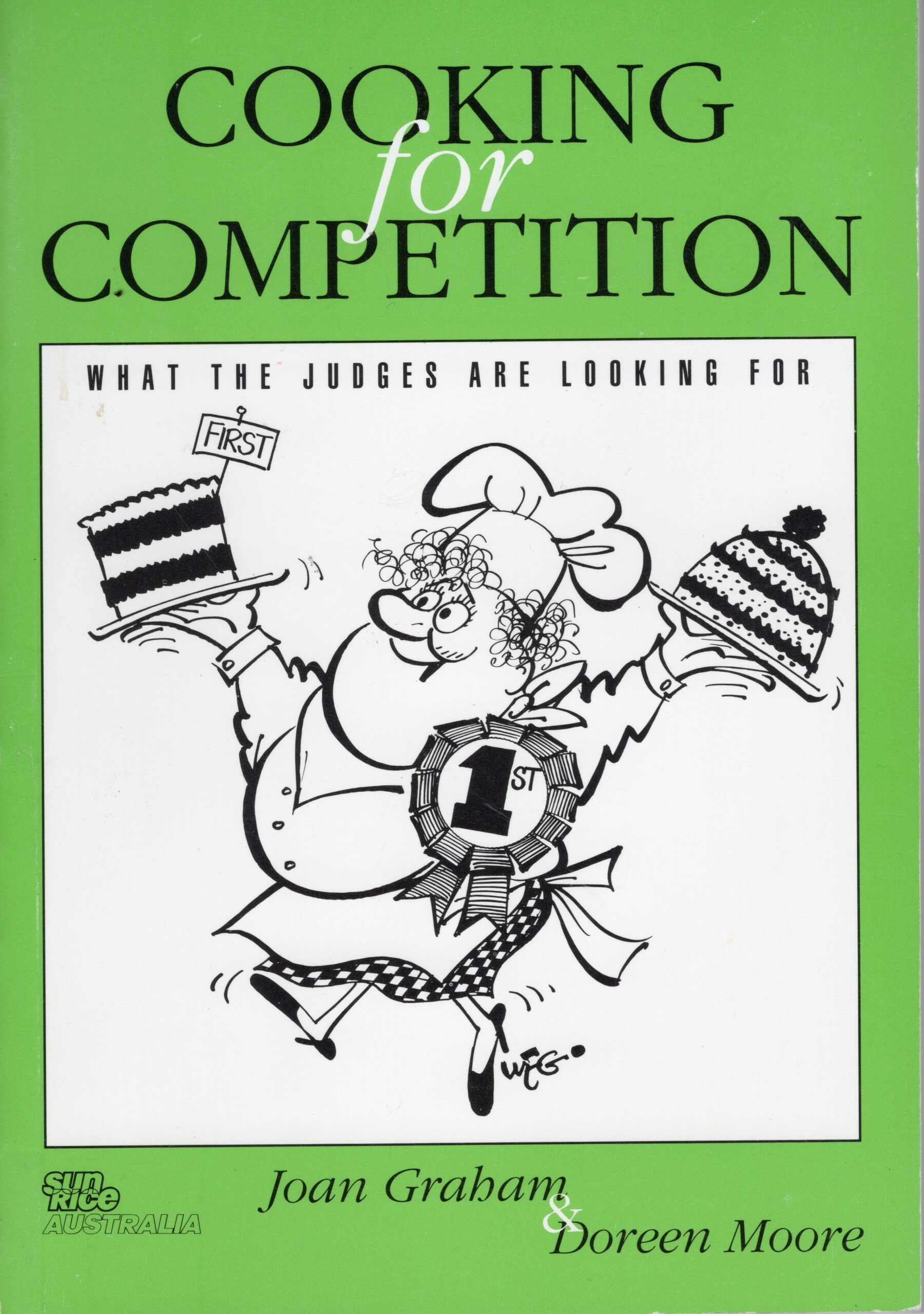
From its early appearance in the cooking competition in Tasmania, the lamington has become a stalwart of Agricultural Show cooking competitions and TV competitive cooking programs. Cooking advice for aspiring Blue Ribbon winners endorses that lamingtons ‘MUST be a butter-cake mixture’. Would-be cooking competition entrants please note – ‘sponges or packet mixes are not acceptable’. (Ref: Cooking for Competition: What the Judges are Looking For, Joan Graham and Doreen Moore, Ercildourne, Richmond, 1991.
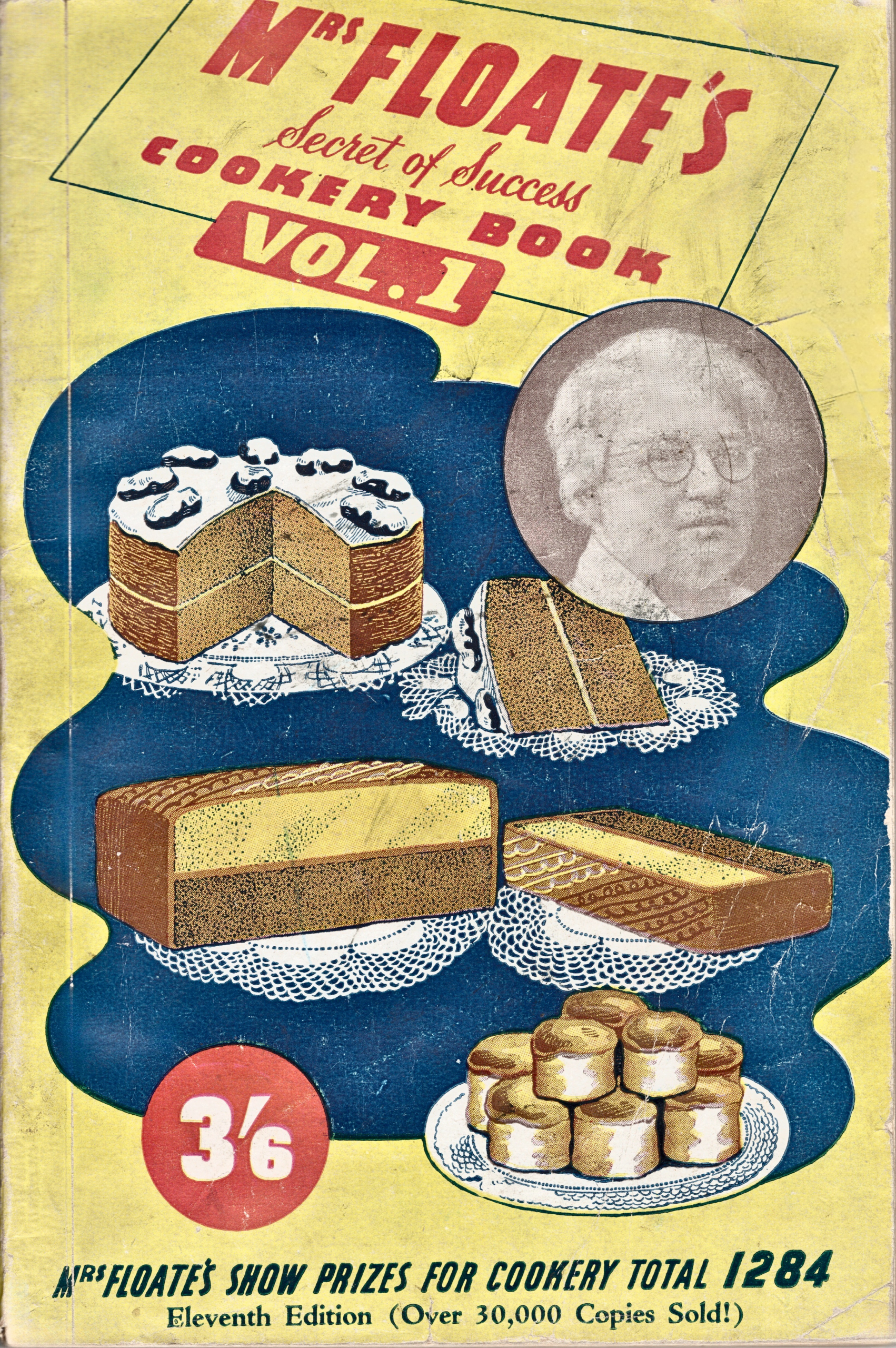
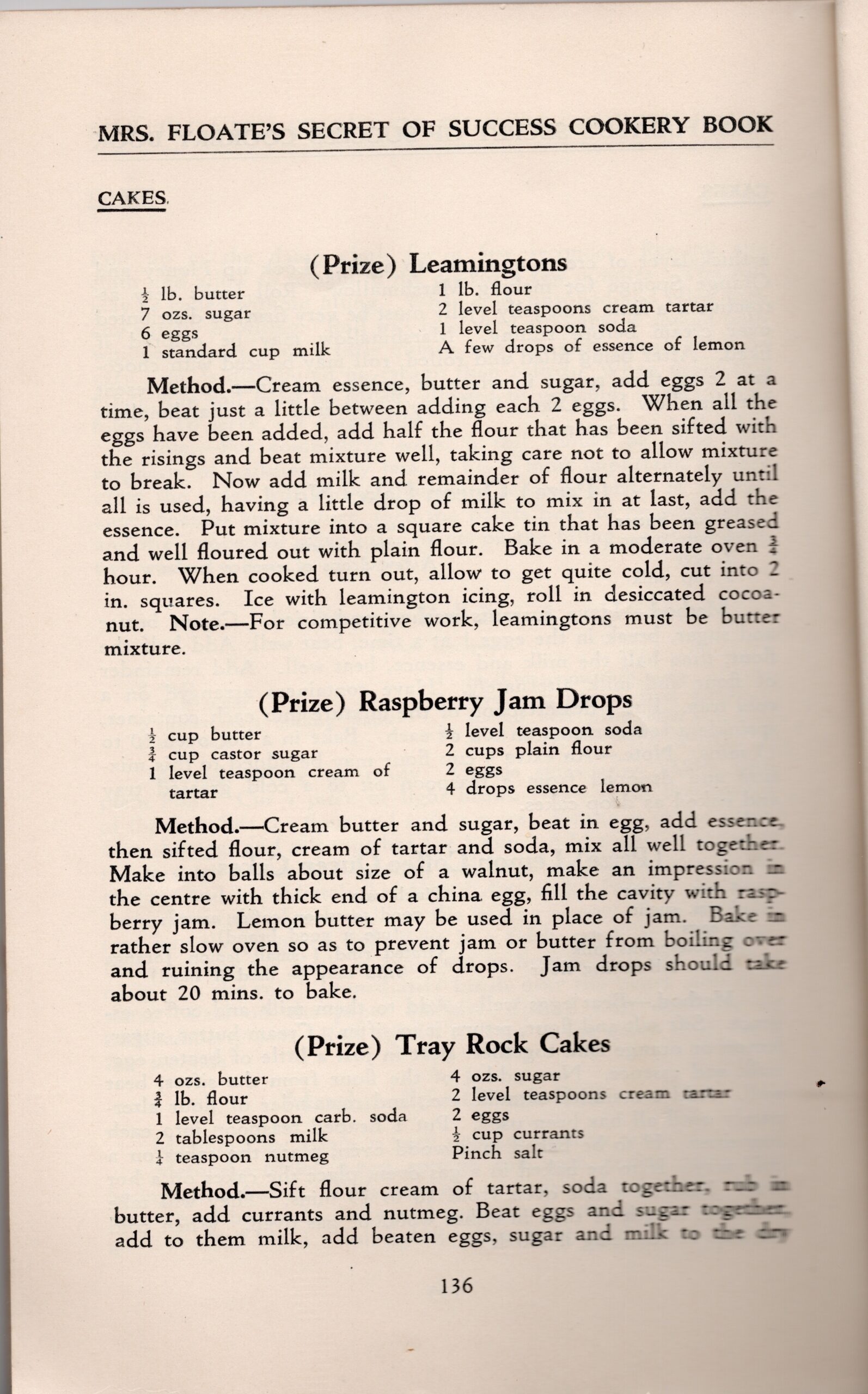
Similarly, some 40 years earlier, successful Show cookery competitor and now judge, Benalla resident Dorothy Floate, produced a series of publications to assist ‘young housewives to become successful cooks’. In Mrs Floate’s Secret of Success Cookery Book Vol 1, she shares her recipe and tips for prize – winning Leamingtons (yes, Leamingtons as they are called throughout the publication). ‘For competitive work, Leamingtons must be butter mixture.’ (Ref: Mrs Floate’s Secret of Success Cookery Book, Vol 1, Robertson & Mullens, Melbourne, 1952.
Lamington Recipes and Ephemera
The popularity of the lamington continued, as evidenced today by the plethora of cookbooks and online recipe sites featuring lamington recipes. Exploring lamingtons from the perspective of ephemera – recipe leaflets, product promotions, pull-outs and cooking booklets is a research, culinary and design treat. A small sample to whet your appetite:
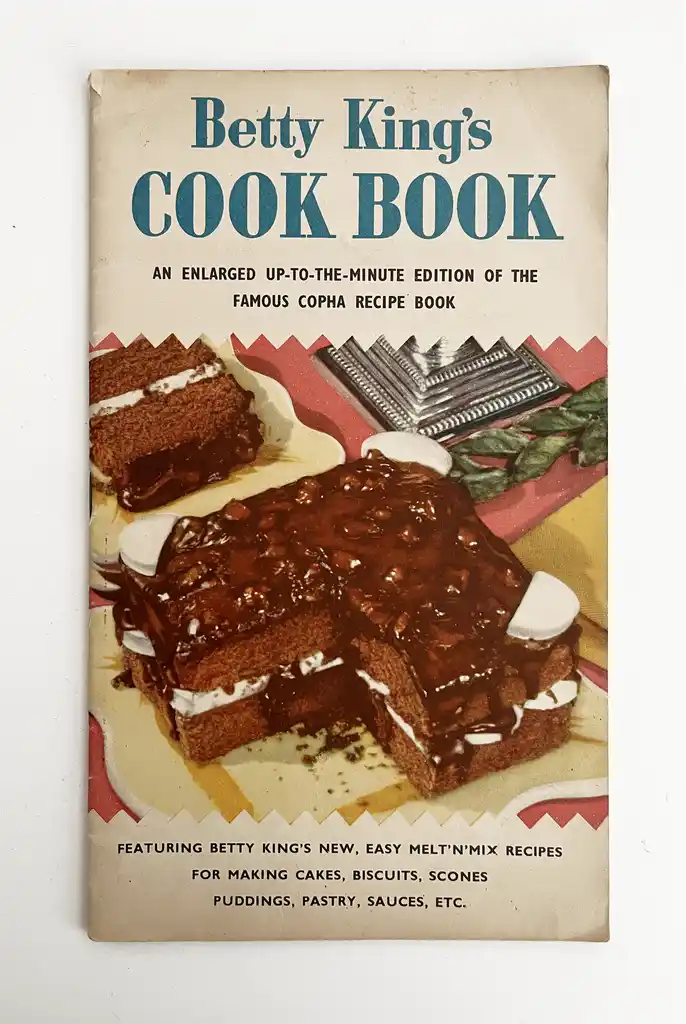
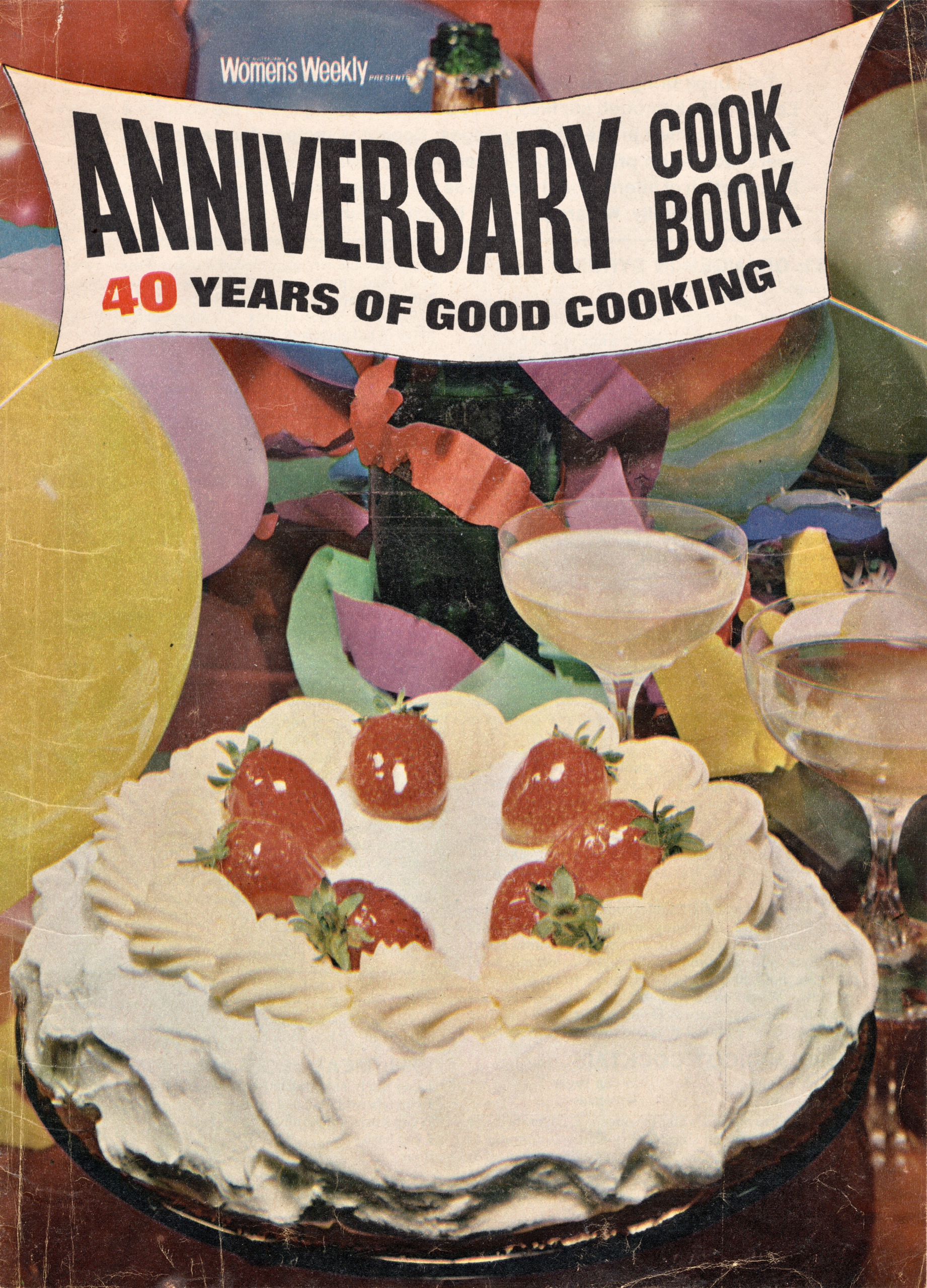
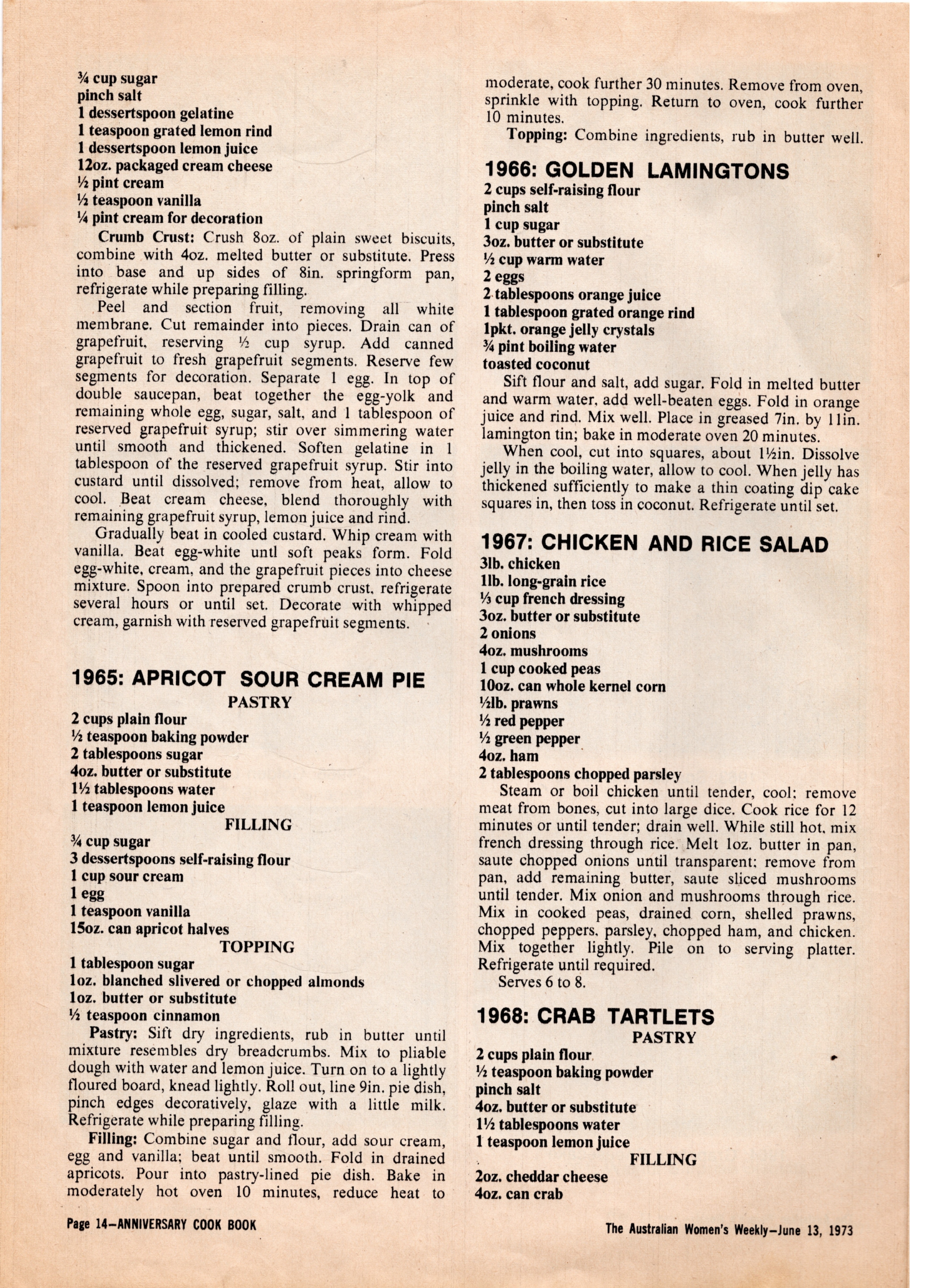
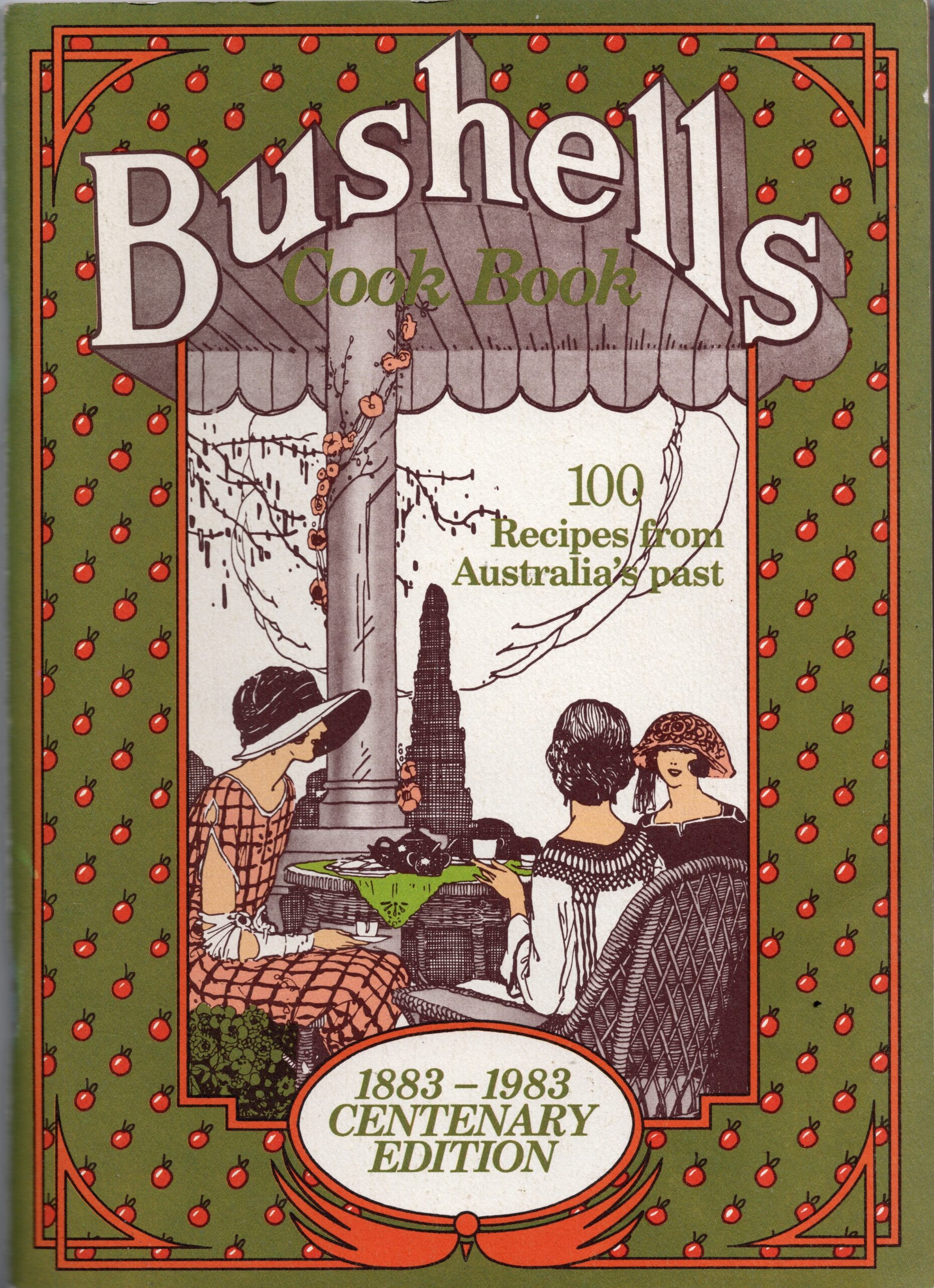
Left to Right
Betty King Cook Book, c.1940s. Collection: SE
Front cover and 1966 Lamington Recipe page, AWW 40th Anniversary Cook Book, booklet, 13 June 1973. Collection: AS.
Bushells Centenary Cook Book, SalesRise, Sydney, 1983. Collection: AS.
Lamingtons – An in-depth Study
For those interested in culinary history, Dr Alison Vincent, Adjunct Senior Lecturer at Central Queensland University (CQU) has written an excellent and very comprehensive article ‘The Lamington’ in the Aristologist analysing the popularity of lamington recipes.
What remains largely unexplored is why the lamington cake captured the imagination of cooks in the early years of the twentieth century. A study of recipes alone cannot completely answer this question however tracking the lamington cake through cook books and newspapers can throw some light on where ideas come from and how they spread and become popular. By putting ourselves in the shoes of home cooks and trying to imagine them in the kitchen we can begin to form a picture of why some ideas and particular recipes are more successful than others. The study of the progress of a particular recipe also provides some insight into the reliability of contributory recipe books as an indicator of actual kitchen practices.
FYI The Aristologist
Based in New Zealand, The Aristologist is a Journal of Food History and Gastronomy. The journal’s aim is to preserve and disseminate the culinary past of New Zealand, as well as that of our nearest neighbour. The journal is produced by a group of academic, professional and amateur gastronomers who are interested in the history and philosophy of eating, meals, food and foodways. Together with the journal there is also an annual symposium. According to the website, ‘we are currently in the process of putting together two future volumes devoted to Katherine Mansfield and “Curry.”‘
The Lamington Hoax – the Wellington Cake Affair
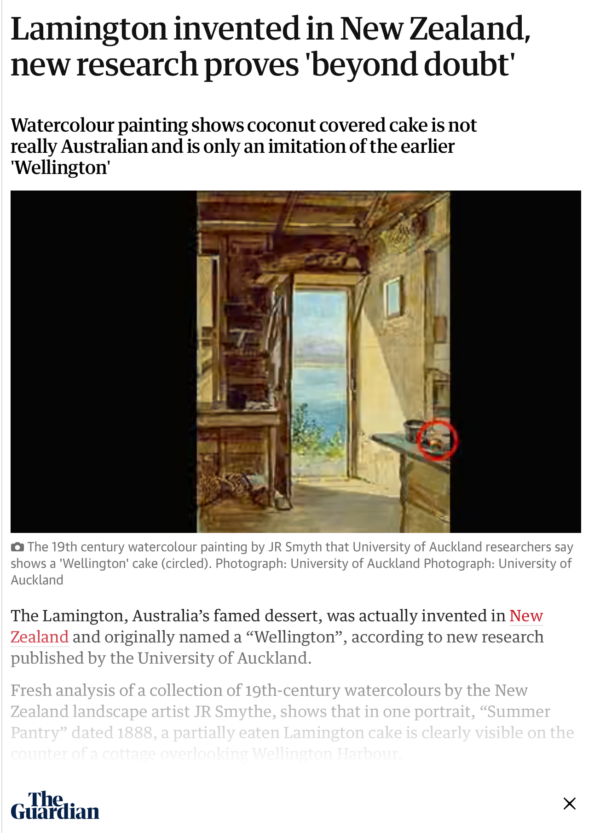
In April 2014, an article appeared in The Guardian newspaper proclaiming the discovery of new evidence confirming that the Lamington had originated in New Zealand and its existence predated its invention in Australia.
The evidence was pictorial – ‘A 19th century watercolour painting by JR Smyth that University of Auckland researchers said showed a ‘Wellington’ cake (circled). Photograph: University of Auckland Photograph: University of Auckland’.
The article was attributed to Olaf Priol and stated that ‘Fresh analysis of a collection of 19th-century watercolours by the New Zealand landscape artist J R Smythe, shows that in one portrait ‘Summer Pantry’ dated 1888, a partially eaten lamington cake is clearly visible on the counter of a cottage overlooking Wellington Harbour.’
Perhaps the multiple spelling of Smythes name throughout the article and the description of a landscape painting as a portrait was deliberate to provide readers with some clues – an April Fools Day prank. Nonetheless, the ‘hoax’ highlights the significance of the lamington to Australia.
National Lamington Day – 21 July
Researching National Lamington Day has led down down many fascinating rabbit holes. Concrete reasons for establishing a national day have proven elusive. Some groups have adopted National Lamington Day as an opportunity to raise funds for charity, via lamington drives and associated events, but this isn’t a key driver for establishing or celebrating the day.
The words community, icon and culture are commonly ascribed to the lamington today and contemporary articles, media and product promotions describe the lamington as an Australian ‘culinary icon’. There is an Australian Lamington Appreciation Society (ALAS) with a website ‘dedicated to the history of – and insatiable interest in – Australia’s most famous culinary icon’ which is ‘committed to the preservation and promotion of Australia’s national icon’ (FYI: An entertaining site with a sprinkling of historic faction!) https://australianlamingtons.blogspot.com/
In 2009, the significance of the lamington was acknowledged and its status as a cultural icon – as opposed to a culinary icon – was endorsed when the Government of Queensland included the lamington in its list of the state’s Q150 icons. The lamington was included as one of the 10 icons in the ‘innovation and invention’ category.
Throughout its long history, the lamington has endured as a firm culinary favourite. There are endless variations snd derivations of the recipe (the AWW online offers 20 Lamington variations for the home cook, 2026) but the core ingredients and premise remain the same.
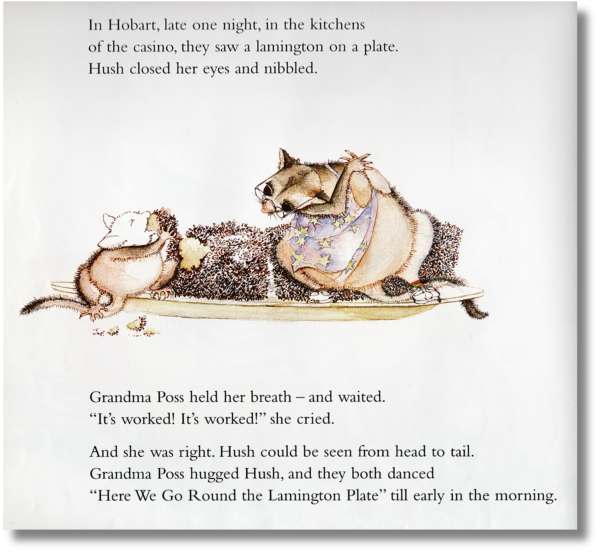
National Lamington Day is most commonly described as an opportunity to bake, share and enjoy lamingtons. Perhaps this philosophy is best captured and immortalised in the children’s classic book Possum Magic – will you be Going Round the Lamington Plate on National Lamington Day?
Further References and Lamington Enjoyment
The State Library of Queensland has an excellent blog article written by Chris Currie on the Lamington (2023) https://www.slq.qld.gov.au/blog/who-invented-lamington-answers-may-surprise-you
The State Library of Queensland also has Cake the Podcast (2024) https://www.slq.qld.gov.au/discover/podcasts/cake
The AWW online offers ’20 Lovely Lamington’ variations and instructions (2026) https://www.womensweeklyfood.com.au/baking/lamington-recipes-1-31944/
The Melbourne Royal Show cookery competition is now open (2026) https://www.melbourneroyal.com.au/media/13401/acc-schedule-p6.pdf
Possum Magic, Mem Fox and Julie Vivas, Scholastic Australia, first published 1983. Find a copy on your home bookshelf or local library. NB The Possum Magic Cookbook (2015) is also available.
The Magic Pudding Cookbook, Scholastic Australia, 2000. Includes a recipe for ‘Noble lamos for pudding owners’.
Author: Dr Annette Shiell, July 2026
1 Comment. Leave new
A fascinating story!
Well done, Annette,
Regards,
Derek Moore