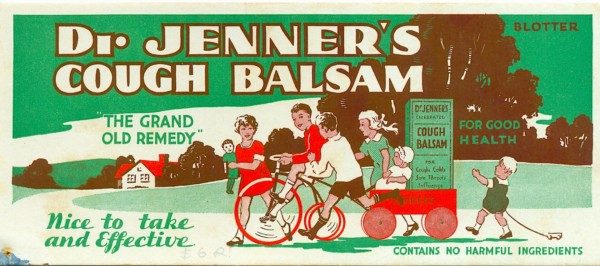
From the collection of Andrew H., whose interests include medicine, health and blotters. Dr Jenner’s cough balsam has been advertised since the start of the twentieth century. Points of difference about the product have changed over the years – the reference to ‘contains no harmful ingredients’ seems to date from the 1920s. Beautiful group of children with dolls, train on a rope and high socks. This is an unusual subject for a blotter as many were directed to those doing office work – promoting pens, insurance, suits and hats, fuel and tyres. There are subjects directed to the housewife and this health and children one fits in that category.
Blotters: were ‘a desk-top trade card and year round promotion pieces. They were first used in Britain in the 15th century; the paper was coarse and grey and remnants have been found between leaves of manuscripts. Blotting paper was widely used in the 19th century. The paper was made of high quality rag to maintain its absorbency. It was pink because it was made from Turkish red cotton rags, not suitable for writing paper.
The absorbency required for the blotter presented a problem for the advertising blotter. It was not until the early 20th century that a printed surface coating allowed for full colour printing on one side. The calendar and the blotter became the favorite advertising novelties. The arrival of the ballpoint pen was the death of the blotter.
Sources: Maurice Rickards – The encyclopedia of ephemera.
Did you know: Queen Victoria is said to have used thin red blotting paper and each piece was destroyed after use.
Leave a Reply